BusPas – Smart Bus Stop Sign

Scientific and Industrial Instruments

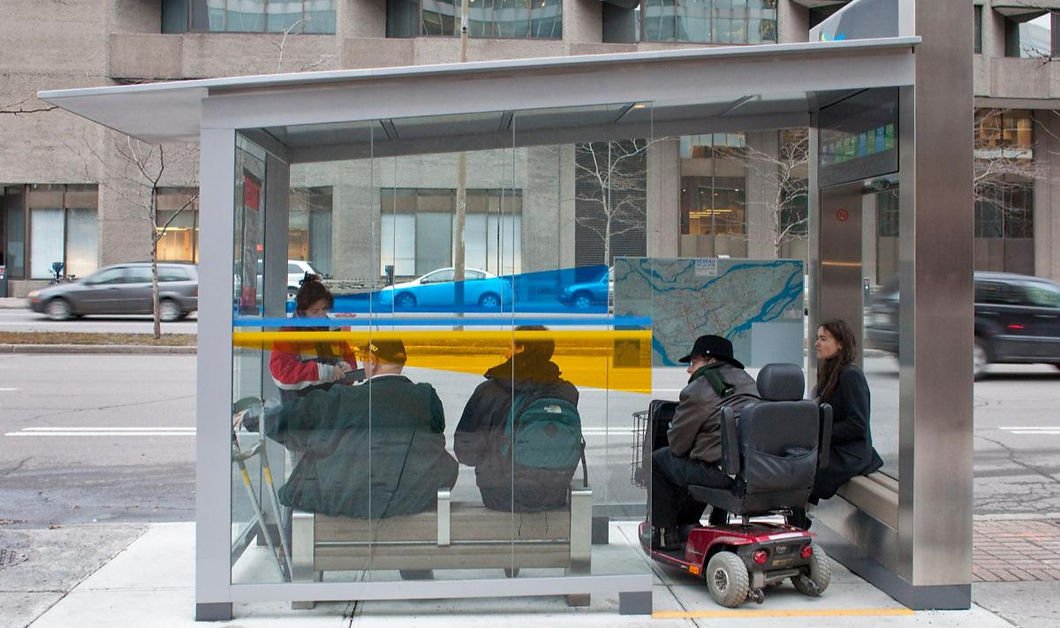
Passengers waiting in a Montreal bus shelter, the everyday setting the BusPas smart bus stop sign was designed for – industrial design by SurfaceID

BusPas is a smart bus stop sign that tells transit riders exactly when their bus is coming, with no app required. BusPas came to SurfaceID, a Montreal product development, industrial design and mechanical engineering firm, to turn their idea into a real product. Our team developed, designed, engineered, prototyped and produced the smart bus stop sign, from the first form factor sketches to the production-ready, solar-capable unit now installed on streets in Quebec, Toronto, New Jersey and Barcelona. It gives riders real-time arrivals on a readable e-paper screen, audio announcements and night-time safety lighting, and it gives transit agencies the passenger data they need to plan better service.

Visit the BusPas website

The Bus Stop, Re-imagined

For most riders, a bus stop is a pole, a printed schedule and a lot of guesswork about whether the bus has already gone by. BusPas, founded in Montreal in 2017, had the idea of turning that ordinary stop into a connected, real-time information point, and came to SurfaceID to build it.

We brought Hybrid UX Research, a UX research firm, onto the project to study how riders really use bus stops, while our industrial design and mechanical engineering teams took the product from user research and form factor exploration through prototyping, field pilots and production, a full product development journey from concept to a sign that transit agencies in Canada, the United States and Europe now put in front of their riders every day.

BusPas smart bus stop sign on a TMB bus shelter at Pg Joan de Borbó in Barcelona, part of the Barcelona Innova Lab Mobility pilot – industrial design by SurfaceID, Montreal

Proven on Streets in Canada, the U.S. and Europe

Our smart bus stop design has been tested from Quebec winters to Mediterranean summers. It began with a prototype pilot of more than 25 displays at the STL in Laval, on two corridors that carry nearly half of STL’s riders. In 2024, Sainte-Julie and Sainte-Thérèse, working with exo, became the first municipalities in the world to install the commercial version, with 15 solar-powered stops in each city.

That same year, BusPas won the Barcelona Innova Lab Mobility challenge, leading to a 12-month pilot at about 15 TMB bus stops, and was one of 18 finalists, chosen from 150 applicants, in the Transit Tech Lab run by New York-area transit agencies. That led to a one-year NJ Transit pilot in Hoboken, Union City and Jersey City in 2026, the same year the signs went up at Toronto Transit Commission (TTC) locations ahead of the FIFA World Cup 2026. The connected bus stop work has also been backed by nearly $10 million from the Government of Quebec through Investissement Québec.

In the news: Noovo · TVA Nouvelles · TVRS · Ville de Sainte-Julie · Ajuntament de Barcelona · NJ Transit · NorthJersey.com · Mass Transit · Metro Magazine

How the BusPas Smart Bus Stop Works

The BusPas sign mounts quickly on an existing bus stop pole or shelter and runs on solar power or the grid. It pulls the transit agency’s live data feed and shows arrivals, delays, detours, service alerts and how full the next bus is on a high-contrast, non-glare 13.3-inch e-paper screen, like those on e-readers, with a front light for night.

Text-to-speech announcements read the information aloud, and a motion sensor switches on safety lighting when someone is waiting after dark. Inside, an NVIDIA edge-AI computer counts the people waiting and the riders left behind by full buses. No images or video are stored: only anonymous counts are sent to BusPas’s ORA platform, where agencies also monitor and manage every sign remotely.

Pole-mounted BusPas smart bus stop sign with its e-paper real-time arrival display, TTC stop header and solar-ready enclosure – SurfaceID product development
BusPas smart bus stop e-paper screen layouts showing route numbers and minutes to the next bus – user experience and usability design

Why It Matters: User Experience and Transit Data

User research by Hybrid UX found that riders didn’t trust printed schedules, wanted to know whether the next bus would have room, and often felt unsafe at unlit stops. The BusPas smart bus stop answers all three at the curb. As BusPas’s VP of Innovation, Wissem Maazoun, told Noovo, the main idea is to give riders next-bus information “without needing to download an app” (translated from French).

The e-paper display and audio announcements make the signs ADA-compliant and help riders who are blind or have low vision, a user experience built on usability and accessibility. For transit agencies, the sign delivers data they’ve never had: NJ Transit calls its leave-behind detection, which counts customers unable to board full buses, “a crucial metric for service planning and resource allocation.” That means an agency can send another bus, or a bigger one, where riders are actually being left behind.

Industrial Design Shaped by How Riders Use a Bus Stop

Good industrial design starts with people, and at a bus stop that means riders glancing up from a few steps away, in sun, rain or darkness. Our Montreal industrial design team began with hand sketches and human-scale studies, then developed and tested display height, text size, viewing angles and information layout around how passengers approach and stand near the stop.

We explored several pole- and shelter-mounted form factors to create street furniture that fits the urban landscape yet clearly signals “bus information here,” with the stop name, route numbers and agency branding instantly readable. Working in parallel with our UX researchers from Hybrid UX Research on the interface, we kept usability, ergonomics and accessibility at the centre of every decision, down to ADA-approved fonts and text heights of 5/8 to 2 inches. You can see more of the user research and interface work in Hybrid UX’s case study.

SurfaceID industrial design sketches of BusPas smart bus stop form factors, with human-scale silhouettes for ergonomic display height – Montreal
First functional prototype of the BusPas smart bus stop sign on the workbench, with e-paper display, speaker and sensor openings – SurfaceID mechanical engineering

Mechanical Engineering and Product Development for the Street

A smart bus stop sign lives outdoors year-round, mounted in public space with no supervision, so our mechanical engineering focused on a durable, fire-safe, service-friendly enclosure. Its slim body, about 27 × 13 × 1.5 inches and 15 lb, mounts quickly on existing poles and shelters, and the internal layout was arranged to manage heat and protect the e-paper display, battery, camera and electronics. The sign is IP65-rated, UL-certified, built to a vandal-proof design and rated to operate from −30 °C to +60 °C.

With the optional solar panel and 440 Wh lithium-ion battery, it offers about 3 to 4 days of autonomy, or it can run on 12–18 V DC or passive PoE where grid power is available. Industrial design and engineering worked side by side, using prototypes to validate proportions, mounting and internal layout before moving to production-ready solutions. The proof came in Laval in February 2023, when the solar-powered signs stayed fully operational through −29 °C temperatures and a −41 °C wind chill.


BusPas Smart Bus Stop: Technical Specifications

Every specification reflects a product design challenge our product development team solved to deliver a reliable user experience in permanent outdoor use:

  • Size and weight: 27.1 × 12.8 × 1.46 in (H × W × D), 15 lb
  • Display: 13.3-inch high-contrast e-paper, 1600 × 1200, non-glare, LED front light, ADA-compliant text
  • Computing: NVIDIA Orin edge-AI unit with NVIDIA DeepStream computer vision
  • Sensors and audio: Camera, microphone, dual speakers, PIR motion sensor, ambient light sensor
  • Lighting: Dimmable 5 W, 500-lumen safety light
  • Power: Optional solar panel with 440 Wh Li-ion battery (about 3–4 days autonomy), or 12–18 V DC / passive PoE
  • Connectivity: LTE/4G/5G, Wi-Fi 802.11ac, Bluetooth 5.0
  • Environment: −30 °C to +60 °C operating, IP65, UL-certified, vandal-proof design
  • Installation: Fast mounting on existing poles and shelters

Full specifications on buspas.com →

Full view of the BusPas smart bus stop sign installed at a waterfront bus shelter in the Miami area, showing real-time arrivals on its e-paper display – industrial design and product development by SurfaceID, Montreal

Have a Product Design Challenge for Public Spaces?

From smart city hardware and street furniture to consumer products, SurfaceID’s industrial design, mechanical engineering and product development team in Montreal, Canada turns complex requirements into products people find easy to use.

Talk to our team

Speak to our experts about your unique challenge

Whether you’re identifying your next innovation priority, or looking to accelerate development of an existing concept, our team will have advice to help you move forward.

Related projects

We’ve brought over 150 products to life, pioneering progress in pharma and life-saving medtech.

Our Services

Areas We Serve.

From startups, to large companies; SurfaceID has you covered.

Consumer Product Design

Medical Design

Scientific and Industrial Instruments

Blog.

Read about Industrial Design & Mechanical Engineering, one post at a time.
CAD render of the assembled Tstand uppercase-H base – mechanical engineering and product development by SurfaceID, Montreal

Product Design Challenges Behind the Tstand Base: Ergonomics, Sink Marks, Snap-Fits, and Lifters

What it took to make a simple-looking injection molded part look clean, feel solid, and come out of the mold. Tstand looks simple. It is a tablet stand that rests on your chest while you lie in bed or on the couch, so you can watch a movie without holding the device or craning your […]

Sheet Metal Enclosure Design That Builds Better Products

Sheet Metal Enclosure Design That Builds Better Products

Sheet metal enclosure design aligns form, thermal performance, electronics protection, and manufacturing for housings suppliers can produce reliably.
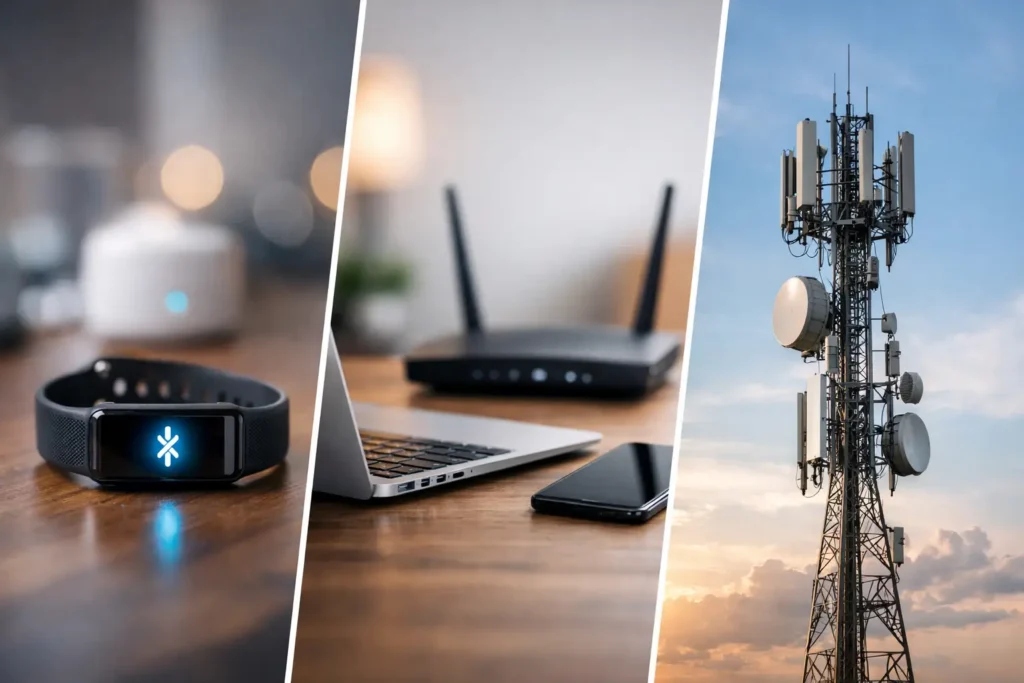
BLE vs Wi-Fi vs Cellular: Choose a Wireless Tech

BLE vs Wi-Fi vs Cellular: Choose a Wireless Tech

BLE vs Wi-Fi vs cellular: how to choose the right wireless technology for your product, balancing power, range, data, cost, and user experience at scale.
How to Validate Hardware Concepts Before Building

How to Validate Electronics Engineering Hardware Concepts

Learn how to validate hardware concepts with focused prototypes, real user testing, and engineering checks before tooling or production costs rise fast.
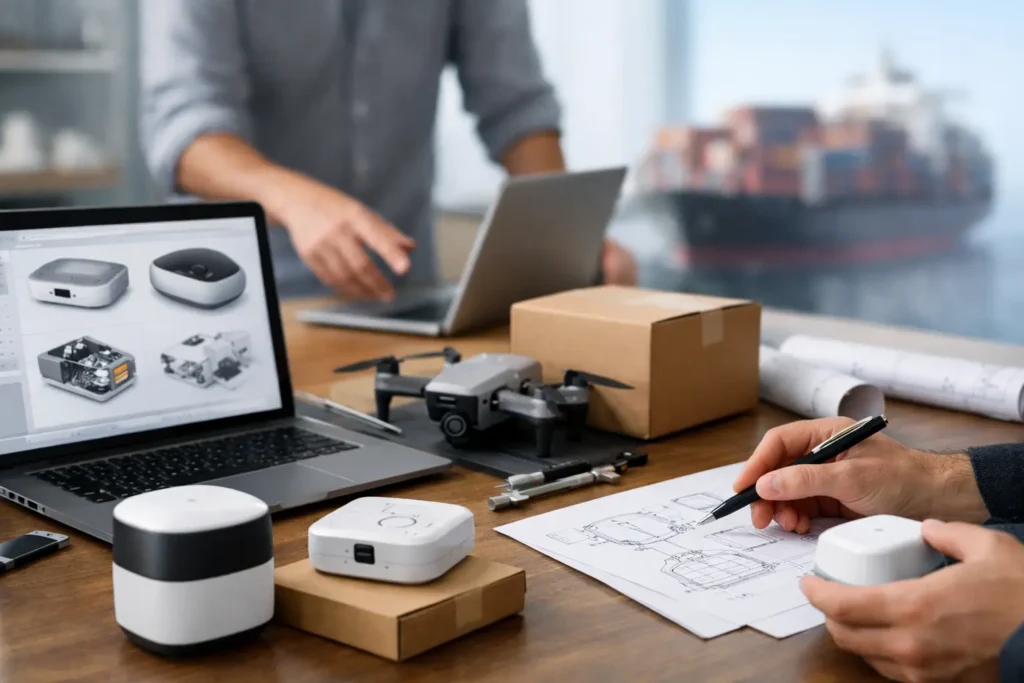
Design Outsourcing for Products That Can Ship

Design Outsourcing for Products That Can Ship

Design outsourcing can accelerate hardware launches when design, engineering, prototyping, and manufacturing decisions are managed by one accountable team.